
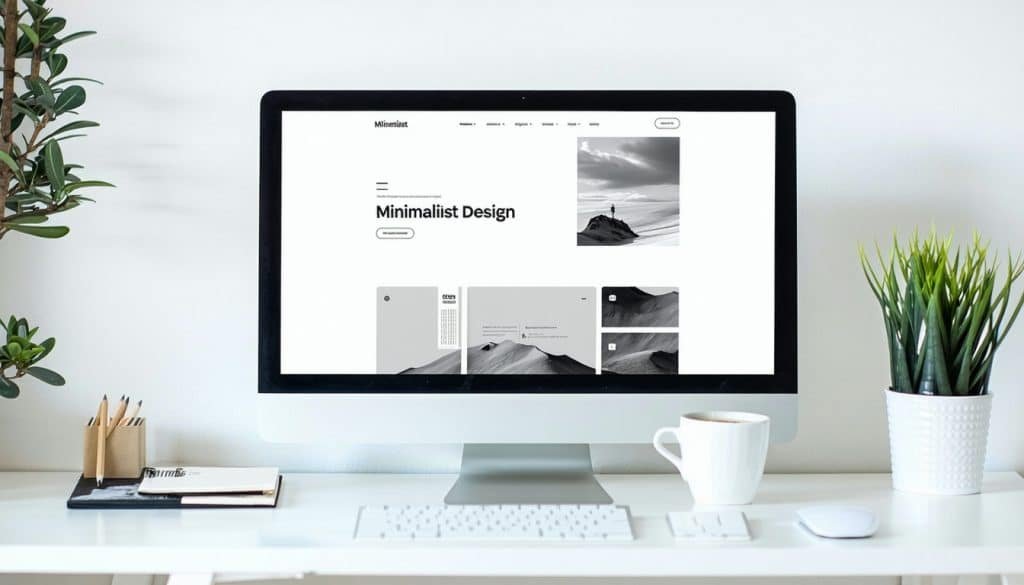
Minimalist web design strips away unnecessary elements to focus attention on what truly matters to your visitors. This approach uses strategic white space, restrained color palettes, and intuitive navigation to create websites that feel both sophisticated and highly functional.
The philosophy centers on purposeful design decisions where every element serves a specific function in guiding visitors toward your business goals.
Core Elements of Effective Minimalism
Strategic white space becomes your most powerful design tool. This isn’t empty space—it’s deliberate breathing room that emphasizes important content while reducing visual overwhelm. Well-planned white space makes text more readable and helps key elements like contact information or service descriptions stand out naturally.
Color restraint strengthens brand recognition and creates visual cohesion. Most successful minimalist designs rely on one or two primary brand colors combined with neutral backgrounds. This limitation forces more thoughtful color choices that support rather than compete with your content.
These principles align seamlessly with current web design trends that emphasize clean, purpose-driven layouts over complex visual effects.
Essential Minimalist Elements
Core design components: • Strategic white space for content emphasis and readability • Limited color palette (1-2 brand colors plus neutrals) • Clean typography with consistent font families • Intuitive navigation with clear, descriptive labels • High-quality imagery that supports rather than distracts
Navigation simplification eliminates decision fatigue for visitors. When menu options are clear and limited, people spend less time figuring out where to go and more time engaging with your actual business offerings.
Studying Successful Minimalist Applications
Effective minimalist websites often feature hero sections with single, powerful messages rather than multiple competing elements. A law firm might showcase one compelling headline about their expertise, while a restaurant highlights their signature dish with minimal distracting text.
Visual hierarchy becomes more important in minimalist designs because fewer elements must work harder to guide visitor attention. Strategic placement of headlines, images, and calls-to-action creates natural reading patterns that lead visitors toward desired actions.
This approach works particularly well when integrated with proven web design best practices that prioritize user experience over visual complexity.
| Design Element | Traditional Approach | Minimalist Approach |
|---|---|---|
| Color Usage | Multiple colors, gradients | 1-2 brand colors plus neutrals |
| Navigation | Complex menus, dropdowns | Simple, clear categories |
| Content Layout | Dense information blocks | Strategic white space, focused content |
| Visual Effects | Multiple animations, effects | Subtle, purposeful interactions |
High-quality imagery carries more weight in minimalist layouts since each visual element receives greater attention. Professional photography or clean graphics become investments in your overall brand perception.
Strategic Advantages for Local Businesses
Minimalist approaches offer practical benefits that particularly serve Bartow County and Cartersville businesses well.
Performance benefits: • Faster loading speeds from fewer design elements • Better mobile performance on slower connections • Reduced hosting and maintenance costs • Easier content updates and site management
Brand clarity improves when visual distractions are eliminated. Visitors immediately understand what your business offers and why they should care, rather than sorting through competing messages or overwhelming design elements.
These advantages become even more pronounced when combined with effective user experience design principles that prioritize visitor needs over decorative elements.
Customer journey optimization works more effectively with fewer navigation choices. Visitors move naturally from awareness to action when each page has a clear, singular purpose supported by uncluttered design.
Implementation Strategy for Service Businesses
Many Cartersville businesses offer multiple services but can still benefit from minimalist design principles. Create focused landing pages for each major service area while maintaining an organized homepage that directs traffic appropriately.
Content prioritization steps:
- Audit existing content – Identify what visitors actually need vs. what you want to tell them
- Focus on benefits – Emphasize customer outcomes rather than feature lists
- Streamline navigation – Group related services under clear, broad categories
- Establish visual patterns – Create consistent layouts for headings, buttons, and content
- Test and refine – Monitor user behavior and adjust based on actual usage patterns
Start with navigation streamlining by grouping related services under broader categories. Instead of listing every specific offering in your main menu, use clear categories that make sense to your customers.
Visual consistency across all pages reinforces your professional image and makes navigation feel intuitive. This consistency should extend to your overall branding and design strategy to create cohesive experiences across all customer touchpoints.
Practical Steps for Minimalist Transformation
Begin by auditing your current website to identify elements that don’t directly support visitor goals or business objectives. Remove outdated content, excessive graphics, or confusing navigation options that complicate rather than clarify.
Implementation checklist: • Remove unnecessary design elements and outdated content • Establish consistent color palette (2 colors maximum plus neutrals) • Simplify typography to 1-2 font families maximum • Optimize call-to-action buttons for visual distinction • Test mobile performance and loading speeds
Typography simplification enhances readability while supporting your minimalist aesthetic. Select one font family for headings and another for body text, avoiding the temptation to use multiple decorative fonts that compete for attention.
Call-to-action optimization becomes more critical in minimalist designs since fewer elements compete for attention. Make your primary action buttons visually distinct and use clear, benefit-focused language that motivates visitors to engage.
These technical considerations work most effectively when combined with SEO-optimized design practices that help search engines understand and rank your simplified content structure.
Measuring Minimalist Design Success
Monitor key performance metrics to ensure your minimalist approach supports business goals rather than just aesthetic preferences.
Key success metrics: • Bounce rate improvements (fewer visitors leaving immediately) • Increased time on site and pages per visit • Higher conversion rates for primary calls-to-action • Improved mobile performance scores • Faster page loading times across all devices
User feedback provides valuable insights about whether simplified navigation and reduced content actually help or hinder visitor experience. Simple surveys or direct customer feedback can reveal usability issues that analytics might miss.
Loading speed improvements should be measurable after removing excess design elements. This performance boost particularly benefits mobile users, making mobile-first design principles an essential consideration for minimalist implementations.
The goal is creating websites that serve both your business objectives and customer needs more effectively through thoughtful simplicity rather than complexity.
Ready to simplify your website design for better results? Contact our minimalist design specialists to discuss how clean, focused design can help your Cartersville business make stronger impressions and convert more visitors.
This article is part of our comprehensive web design series for Cartersville area businesses. Access our complete collection of marketing resources or learn more about our design philosophy for creating effective business websites.